
Welcome, Glastonbury Property Owners
This website is an independent, interactive information resource and service provider for Glastonbury landowners.
Updated
Friday, October 30, 2026
Thinking of moving to Glastonbury?
Welcome to Our Neighborhood
A Place People Love to Visit

Glastonbury attracts visitors with its scenic beauty, unusual history, and distinctive community character. Its setting in Paradise Valley offers sweeping mountain views and easy access to some of Montana's best-known outdoor attractions.
Glastonbury lies in Paradise Valley, near the foothills of the Rocky Mountains in southern Park County, Montana. It is approximately 25 miles south of Livingston and 30 miles north of Yellowstone National Park. The Yellowstone River winds through the valley between the Absaroka Range to the east and the Gallatin Range to the west.
Early History
In the early 1820s, fur trappers arrived in the region in search of beaver. They entered lands long inhabited and used by Indigenous peoples, including the Shoshone and Crow.
In the 1860s, gold prospecting brought more settlers to what is now Park County. Mining, logging, and coal production helped shape the region's economy. Timber supplied buildings and railroads, while coal was processed into coke for the copper smelters in Butte.
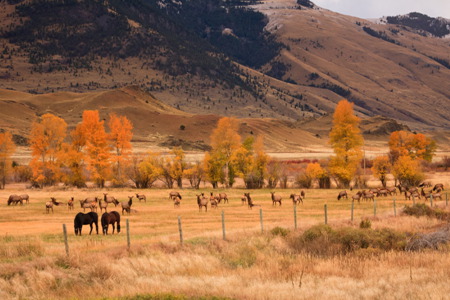
Cattle ranching and grain farming also became important to the valley's economy. Grasslands supported livestock, while cultivated fields supplied crops suited to the local climate. Agriculture helped sustain the growing communities.
The Northern Pacific Railroad completed its branch line from Livingston to the Yellowstone National Park area in 1902. Passenger service ended in 1948.
Glastonbury Political History

In 1982, Church Universal and Triumphant (CUT) established Glastonbury by purchasing and subdividing two ranches in Paradise Valley. The community was intended as a spiritual home for chelas, or disciples, of the Ascended Masters. Its founding vision drew on CUT's teachings about reincarnation and spiritual ascension, with figures such as Jesus, Buddha, and Confucius occupying central places in that belief system.
The community's authoritarian founding covenants sharply restricted personal behavior and land ownership. Land leases were limited to CUT members and included provisions allowing termination on short notice. In 1993, Park County reached a settlement with CUT that helped open the way to individual parcel ownership. Opening Glastonbury to people outside the Church met fierce resistance from followers who regarded it as their Holy Land.
In 1997, community management passed to a new nonprofit corporation, the Glastonbury Landowners Association (GLA). The Restated Covenants were approved, but hundreds of acres of CUT's undeveloped land remained outside their coverage. This arrangement allowed CUT to avoid GLA assessments and development oversight on those parcels. Other parcels became available for private ownership by people both inside and outside the Church.
Political influence on the GLA Board remained concentrated among original settlers, often called "old-timers," and later arrivals affiliated with CUT. For some followers, community leadership carries spiritual significance as well as civic responsibility.
Local estimates place CUT followers at approximately 35% of eligible voters but suggest they account for roughly 60% of ballots cast. These figures are estimates, not a verified count of voters' religious affiliations.
The 2025 Board is described by its reform supporters as the first with a majority unaffiliated with CUT. It adopted reforms intended to serve all landowners equally under the written governing documents. Those changes met bitter opposition, and the reform majority lost control in the 2025 annual election.
Explore Glastonbury's contentious history through newspaper articles and accounts archived on the Glastonbury Community Forum.
Glastonbury continues to attract people who wish to live near the CUT community. The Church's world headquarters is in Corwin Springs, approximately a 15-minute drive away.
A Playground for the Wealthy
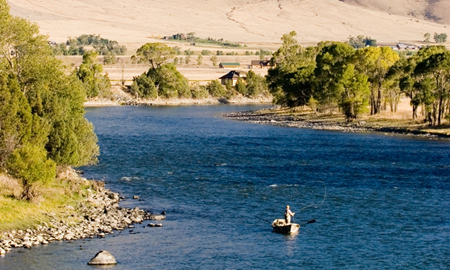
Paradise Valley has become a playground for millionaires and billionaires. Luxury lodging, world-renowned guest ranches, guided fly-fishing trips, and horseback riding can make a visit an expensive proposition.
Short-term rentals are a substantial business in Glastonbury, with local estimates placing their share at 40% to 50% of the housing stock. Advertised rates can range from hundreds of dollars per night to more than $10,000 per week.
Many expensive homes serve as seasonal retreats rather than full-time residences. The year-round population is described as a minority of the community and includes many retirees, with comparatively few children and young adults.
Climate
July and August often bring warm, dry days and refreshing, cool nights. Summer weather can be spectacular, although wildfire smoke may reduce air quality and obscure mountain views. In 2006, the Big Creek Fire destroyed homes in High South Glastonbury and threatened the surrounding community.
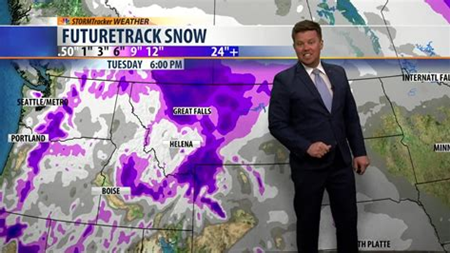
Winters can be long, windy, and bitterly cold, with temperatures falling to -20 degrees Fahrenheit or below. Snow can occur in any month, and winter conditions may persist for six or seven months, particularly at higher elevations.
Becoming stranded on a remote road in severe cold can be life-threatening. The long winter and isolation can also make year-round living difficult.
GLA Annual Assessments

GLA annual assessments are a bargain compared with the cost of maintaining a mountain road system. The amount described here averages a little more than $1.35 per day for most owners with a home.
Assessment increases have struggled to keep pace with inflation since 1997. Resistance comes from several directions: retirees on fixed incomes, vacation-rental owners seeking lower operating costs, and seasonal residents who have little need for winter road service. Year-round residents who depend on reliable access often find themselves in the minority.
Road funding debates are frequently heated. Bringing Glastonbury's roads up to Park County standards would require millions of dollars. Many landowners want better roads, but support is much harder to secure when improvements require substantial assessment increases or the sale of vacant GLA-owned common land.
Glastonbury Roads
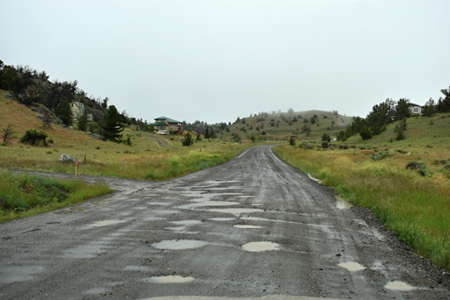
Glastonbury has more than 20 miles of roads, approximately 18 of which receive GLA snowplowing. Fewer miles receive routine grading and maintenance. Estimates cited here suggest that about 90% lack an adequate base or fall short of the GLA's Road and Driveway Standards.
Maintaining these roads is expensive, while assessments remain low. Increasing traffic adds wear to an already strained system.
Roads in the higher areas of North and South Glastonbury can be steep, narrow, and especially hazardous in winter. Some run beside sharp drop-offs with few or no guardrails. Drivers may need to back up to a wider spot to pass safely. Snow, ice, and darkness compound the risks.
Road safety deserves more than an afterthought. In 2025, a motorcyclist died from injuries sustained in a collision at a Glastonbury road intersection that had no stop sign. The fatality raises serious questions about traffic controls and the association's approach to road safety; the absence of a sign alone does not establish the cause of the collision.
For background on the road system, download the analysis of Glastonbury's platted roads, which explains the road easements and their origins.
Recreation
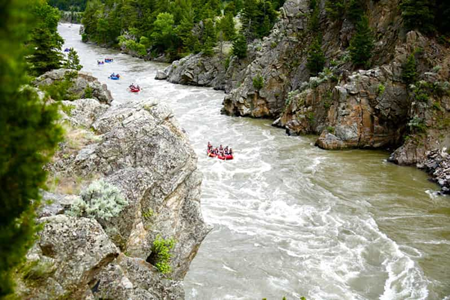
This part of Montana offers exceptional opportunities for trout fishing, big-game hunting, wildlife viewing, and outdoor recreation.
On the Yellowstone River, rafting ranges from the rapids of Yankee Jim Canyon north of Gardiner to gentler floats through Paradise Valley. Nearby national forest lands and Yellowstone National Park offer hiking, camping, and cross-country skiing. Regional downhill skiing destinations include Bridger Bowl and Big Sky.
Chico Hot Springs, near Emigrant Mountain, offers pools fed by natural hot springs. Guest ranches and other accommodations provide additional ways to experience the valley.
Government

The GLA's 12-member volunteer Board serves staggered terms and oversees road maintenance, assessments, property improvements, and annual elections. Typically, six seats are filled each November.
Elections are often contentious, reflecting a long-running dispute over whether the association should preserve CUT's founding influence or operate as a secular organization governed by written rules that apply equally to every landowner. Religious affiliation does not, by itself, establish a voter's position on that dispute.
Low participation magnifies the influence of organized voting blocs. Estimates cited here suggest that 50% to 70% of eligible landowners do not vote. Some candidates have reportedly won two-year terms with a single vote, and others with fewer than ten. Those results underline how much individual participation can matter.
Board service demands substantial time and effort. An active director may devote ten or more hours a week to association business. When only a handful of directors carry most of the workload, the commitment can approach a full-time job, and burnout becomes a serious problem.
Your Neighbors Would Love to Hear From You
Have a question, a helpful tip, or a different point of view? Join the conversation. You don't need to write an essay - a sentence or two is a great start.
Not sure what to say? Try one of these:
- What did you find helpful on this page?
- What would you like to know more about?
- What experience or local tip could you share with a neighbor?
Different views are welcome. Please keep the conversation respectful and focused on ideas, so everyone feels comfortable joining in.
Join in using the comment box below. We look forward to hearing from you!
No registration needed. Questions and short comments are welcome!

New here? Here's how commenting works.
- You can leave a comment as a guest. Guest comments may take about a day to appear while they are reviewed.
- Registration is optional. Click "Login" in the comments area to get started. Registered users' comments appear immediately and can be edited later.
- Click "Reply" to respond to a neighbor. Use the up or down arrows to vote on a comment.
- Comments are moderated, and spam is removed.
Was this page helpful?
|
Search our site |
The opinions and ideas expressed on this site are presented for community discussion and involvement. They may or may not align with the views of the current, ever-changing GLA Board.
By using this website you are agreeing to our Terms of Use.
Copyright © 2025-2026 Brockett Designs All rights reserved
Template courtesy of W3layouts. Built by Tim Brockett (Brockett Designs) with assistance from Claudette Dirkers.
This site is not affiliated with the Glastonbury Landowner's Association